Why We Prioritize Charging Our Devices, but Not Ourselves?
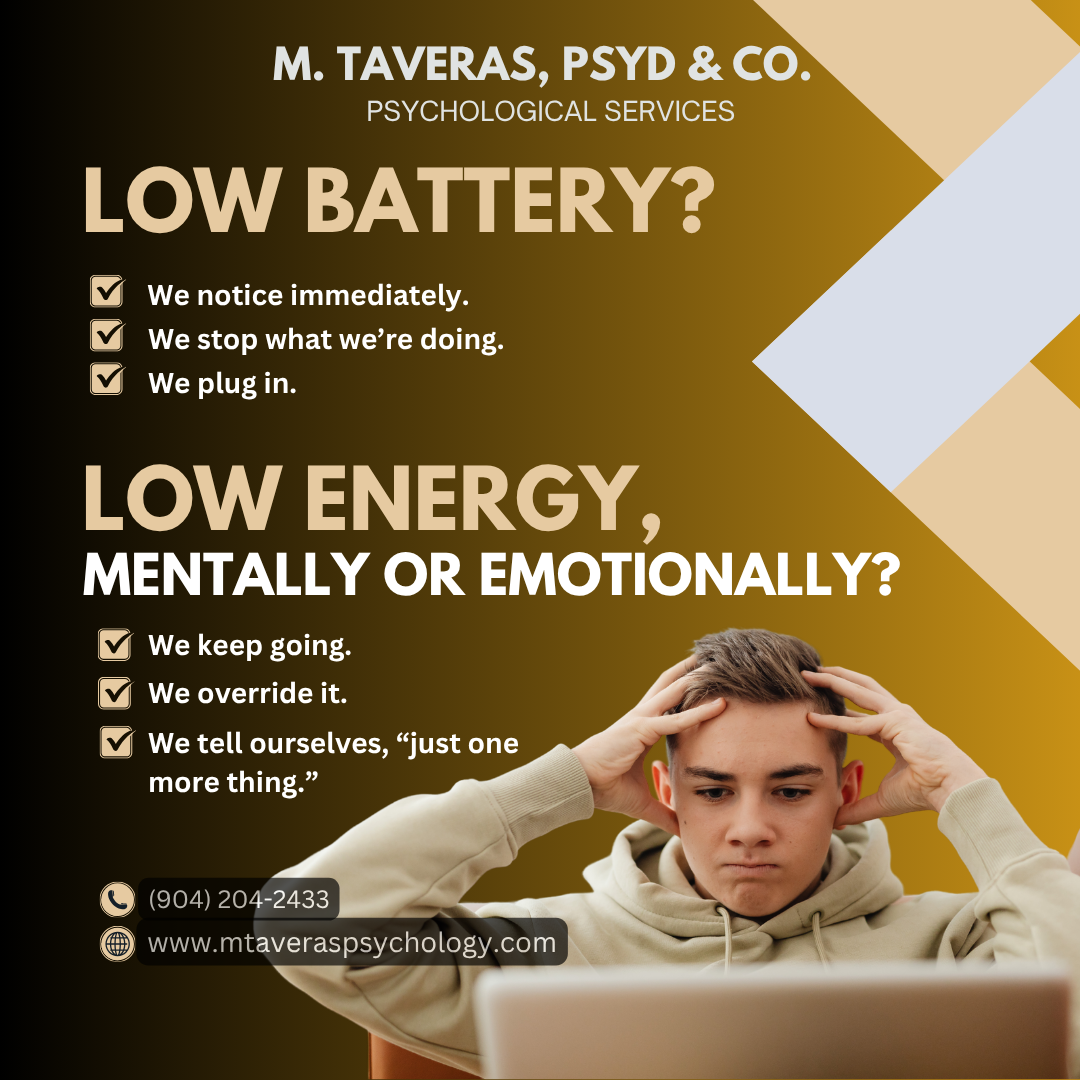
Are You Running on Empty? Why We Prioritize Charging Our Devices, but Not Ourselves?
Take a moment and consider how you respond when your phone battery drops to 10%. You notice it immediately. You stop what you’re doing, look for a charger, and make it a priority. Now consider this: what do you do when you feel like you’re at 10%? For many people, the response is very different. Instead of pausing, we push through. We ignore fatigue, override stress, and tell ourselves, “just one more thing.” Over time, this becomes the norm: operating on low energy, mentally and emotionally drained, without extending the same care to ourselves that we so readily give our devices.
Why We Ignore Our Own “Low Battery” Signals?
Unlike a phone, we don’t receive a clear notification that forces us to stop. Instead, our mind and body send more subtle cues:
Persistent fatigue, even after rest
Increased irritability or frustration
Difficulty focusing or making decisions
Loss of motivation
Emotional exhaustion or a sense of disconnection
These signals are easy to dismiss, particularly when responsibilities, deadlines, and expectations continue to build. Many people come to believe that slowing down simply isn’t an option. However, ignoring these signals does not make them disappear; it often accelerates the path to burnout.
Burnout Doesn’t Happen Overnight
Burnout is rarely sudden; it develops gradually from consistently running on empty. Without time to recharge, our capacity to cope begins to erode. Tasks feel heavier, stress is more intense, and even manageable responsibilities can start to feel overwhelming. Over time, this impacts more than productivity; it affects relationships, mood, and overall well-being.
Rest Is Not a Luxury; It’s Maintenance
There is a common belief that rest must be earned; that we can only slow down once everything is done. In reality, that moment rarely comes. Rest is not a reward; it is a requirement. Just as your phone performs more effectively when charged, you function more effectively when your mental and emotional energy is restored. Intentional rest allows for clearer thinking, more regulated responses, and a greater sense of presence in your daily life.
What Does “Recharging” Actually Look Like?
Recharging does not always require significant time away; it often consists of small, intentional actions integrated into your routine:
Setting boundaries around your time and energy
Taking brief, restorative breaks throughout the day
Engaging in activities that help you decompress
Prioritizing sleep and recovery
Processing stress rather than carrying it alone
The key is intention; treating your energy as something worth maintaining, not something to be depleted.
Start Paying Attention to Your Signals
If you’ve been feeling drained, overwhelmed, or mentally exhausted, consider the possibility that your mind and body are signaling a need to recharge. Rather than pushing through, what might shift if you responded differently, treating your energy as something to protect? Because it is.
You Don’t Have to Do It Alone
If slowing down, setting boundaries, or managing ongoing stress feels difficult, support can make a meaningful difference. At M. Taveras, PsyD & Company Psychological Services, we work with individuals navigating stress, burnout, anxiety, and depression, helping them develop healthier, more sustainable ways to care for their mental and emotional well-being.
📍 In-person and virtual sessions available
🌐 mtaveraspsychology.com
📞 (904) 204-2433
Regards,
Michelle C. Taveras, PsyD, MSW
Licensed Clinical Psychologist & Founder